Welcome back to Reading the Research, where I trawl the Internet to find noteworthy research on autism and related subjects, then discuss it in brief with bits from my own life, research, and observations.
Research and book reviews, life on the spectrum, and autistic perspectives on important topics. Updates Mondays and Fridays
Monday, May 3, 2021
Reading the Research: The Real Link Between Violence and Mental Illness
Monday, April 26, 2021
Reading the Research: Autistic Sociability in a Pandemic
Welcome back to Reading the Research, where I trawl the Internet to find noteworthy research on autism and related subjects, then discuss it in brief with bits from my own life, research, and observations.
Today's article has a bit of a skewed view on what likely happened, but presents some positive information I'd like to highlight. This article comes to us from a university in Spain. While that's certainly not the US, it is still a "Western" country with some of the same cultural values and similar home/work patterns.
The TLDR (Too Long; Didn't Read) is: autistic kids, and their families, did much better than expected during the COVID 19 lockdown. These families even improved their communication over the course of the lockdown. I say "families" rather than focusing specifically on the autistic children, because communication is a two-way street. Autistic people communicate. We just don't always communicate in words.
This article doesn't say the transition wasn't difficult on the families and the autistic children. The pandemic destroyed or massively altered regular routines, which is very hard on people that rely on those routines for comfort and safety. That's autistic people, and others that struggle with regular life. Things were also more difficult because support services for the autistic children were not available, or were less available. Educational options were minimal or nonexistent as well. So initially, things became more difficult for families with autistic members.
However, in the long term, as new routines were established, the autistic children and their families thrived more. The parents, often unable to go to work, spent more time at home, interacting with their kids. With the additional interaction and attention, the autistic children thrived. Or put another way: with more social interaction with people they love and trust, autistic people thrived.
The last thing I want to underline from this article is this: autistic people are often stereotyped as not being social, not caring about others, etc. This study specifically states that these autistic children were calmer and happier when they were able to use the Internet to see their distanced grandparents, classmates, and other family members. In other words, autistic people were also happier being social and seeing people they cared about.
In other words, yes, we are just like you this way- diagnosis or no.
(Pst! If you like seeing the latest autism-relevant research, visit my Twitter, which has links and brief comments on studies that were interesting, but didn't get a whole Reading the Research article about them.)
Monday, April 19, 2021
Reading the Research: Supportiveness
Welcome back to Reading the Research, where I trawl the Internet to find noteworthy research on autism and related subjects, then discuss it in brief with bits from my own life, research, and observations.
Today's article showcases what I wish every person had. Especially autistic people, but just in general, too.
Depression is a part of normal life. Typically people will experience a couple months of it here or there, when someone they love dies, or a major life change happens... like, y'know, a worldwide pandemic that mandates staying away from other people as much as possible.
In most cases, people recover from depression in a few months. Sometimes, though, the emotional burden is great enough that it doesn't. Or toxic substances, like mold or allergens, cause systemic inflammation, which in turn causes lasting depression. There's a lot of reasons a person can end up depressed. Autistic people tend to suffer depression at a much higher rate than the general population, in part due to how poorly designed the world is for us.
In these all cases, the focus is typically on the depressed person to make changes and improve. Pills may be prescribed. Changes in diet, in activity level, and in location might be suggested. Therapeutic services might begin. New habits might need to be established, and new patterns of thinking or talking. All of these things can be helpful in recovering from depression.
What's not typically considered is the effect of the other people in the household on the depressed person. So it's good to see this article, which shows us a path that others can take to help people with depression.
While the article focuses on significant others (mainly spouses), I have no doubt significant results would have been found if they'd decided to study depressed children and these behaviors in their parents and siblings. Having someone closely onhand who understands and will listen without being judgmental or taking it personally is invaluable to feeling supported and helping the person recover.
There are certainly some people who are naturally better at these listening and supportive behaviors than others, but it's all behaviors that can be learned. I wish it was taught in schools, so everyone would know how to be supportive and kind to people with mental illnesses. That's not just autistic people, after all. Everyone would benefit from that learning.
(Pst! If you like seeing the latest autism-relevant research, visit my Twitter, which has links and brief comments on studies that were interesting, but didn't get a whole Reading the Research article about them.)
Monday, April 12, 2021
Reading the Research: Catastrophizing
Welcome back to Reading the Research, where I trawl the Internet to find noteworthy research on autism and related subjects, then discuss it in brief with bits from my own life, research, and observations.
Today's article is some long overdue pushback against the Autism $peaks style catastrophizing of autistic lives and outcomes.
For decades, studies on autistic people and our lives have typically focused on what we can't do, and what things we struggle in. This is because of the history of the diagnosis and the medical field overall. Things are labeled as illnesses, a treatment (typically just one, like for a broken leg) is prescribed, the patient does the treatment and gets better.
This is simplistic, but it works for many physical ailments. The thing is, autism is not that. There is no broken bone. Autism is a neurodevelopmental condition. There is no one-size-fits-all treatment, and there never will be. We are simply too different from each other. Those individual differences have to be accounted for.
This study differs from those of the past by having a much broader focus. Instead of starting and stopping the narrative with, "well, your kid is autistic, and they're always going to be autistic, so it's time to give up any dreams and hopes you had for your kid and prepare for a life of suffering," this study instead chose to see whether autistic children learn and grow in understanding and ability.
Unsurprisingly, I hope, to anyone who's met an autistic person, the answer is yes. While not every autistic kid will necessarily reach all milestones for "normal" communication or independent living, we do continue learning throughout our lifetimes. Recognizing those successes is an important part of support for autistic people and our families. It also goes a long way toward undermining the doom and gloom that medical professionals and even some parents project onto
The study also examined what factors contributed to autistic growth and development of skills. Unsurprisingly, it helped to have a certain amount of income. Adequate income takes a significant amount of stress off the family, and allows for more options for family and singleton therapy, as well as support services, better schooling options, and their choice of doctors and medical professionals.
I'll be interested to see what this group's research on adolescents shows. This study only went up to age 10, which is definitely sufficient to prove that autistic people aren't magically stuck at the developmental age they're diagnosed at. But the teenage years are distinctly more demanding and difficult than the years before them, and so that data would be exceptionally useful as well.
For further information on this learning and growing (also called neuroplasticity), please also consult this podcast episode.
(Pst! If you like seeing the latest autism-relevant research, visit my Twitter, which has links and brief comments on studies that were interesting, but didn't get a whole Reading the Research article about them.)
Monday, April 5, 2021
Reading the Research: Misjudging Stereotypical Autistic Behaviors
Welcome back to Reading the Research, where I trawl the Internet to find noteworthy research on autism and related subjects, then discuss it in brief with bits from my own life, research, and observations.
Today's article helps show that the miscommunication issue between autistic people and neurotypical people is not simply an autistic failure, but a failure on neurotypical peoples' parts as well.
There's a few stereotypes you can see in the presentation of autistic people mentioned here. Things like avoiding looking people in the eyes (can be overwhelming), literalist thinking, and repetitive movements (often used to calm ourselves in stressful situations) are all factors. It's gotten to the point where I can, in some circumstances, interact with a person and be able to tell almost immediately that they're neurodiverse.
Apparently, this article says, these behaviors look like the actions of a person being deceptive. Oddly enough, these behaviors are actually not particularly indicative of a person being deceptive... we as a culture simply think they are.
The implications go much, much further than the article suggests. In court, autistic people receive harsher sentences than our typically developing peers. But I'll bet dollars to doughnuts the same effect holds true in other arenas of life, such as job interviews and first impressions.
When we talk about autistic people being disabled, this is a major part of it: the way others see and react to us. Others' prejudices and failures are not our fault, but we're expected to bend over backwards to compensate for them. That's neither fair nor healthy for anyone involved.
It's the same expectation as saying, "well if women don't want to be sexually assaulted, they should wear clothing that hides every inch of skin." Or maybe more accurately, saying, "Well if black people don't want to be murdered by the police, they should act like they're white as much as possible and be as nonthreatening as possible at all times."
Because of this prejudice effect, autistic people are denied the chance for friendships, the ability to participate in our communities, job and volunteer opportunities, promotions, and general human consideration. We deserve better.
(Pst! If you like seeing the latest autism-relevant research, visit my Twitter, which has links and brief comments on studies that were interesting, but didn't get a whole Reading the Research article about them.)
Monday, March 29, 2021
Reading the Research: Companion Cats
Welcome back to Reading the Research, where I trawl the Internet to find noteworthy research on autism and related subjects, then discuss it in brief with bits from my own life, research, and observations.
Today's article is one of various articles I've seen about companion animals and autistic people.
The research is pretty simple here. Owning a compatible pet can be a very positive experience for autistic people. Many studies focused on dogs, since dogs display their affection more. As a bonus, they need to be walked, which can mean built-in exercise for the family or individual.
There's something to be said for cats, though, and that's that if you get the right one, they're comparatively low-maintenance while still being affectionate and supportive. They're typically quieter than dogs, which is a bonus for humans with sensory sensitivities.
In both cases (or other, less common pets, like rats, snakes, birds, gerbils, hamsters, etc), the fact that the animal doesn't judge by human criteria is incredibly valuable. Their needs are simpler, and they're often more forgiving than human peers. A good pet can be a support and a joy to any household, not merely ones with autistic people.
I'd tend to say furred and affectionate animals might be a better match for most autistic people, given that petting the animal can be a pleasing sensory experience. Particularly with a purring cat, indicating the petting is making both you and the cat happy.
As with any support for autistic people, careful consideration of the specific person and their needs is required. Immediately rushing out to buy the cutest cat or dog you can find is not kind to the autistic person or the animal. Keeping noise considerations, specific human and animal temperaments, required responsibility, and other relevant factors in mind is important in these decisions.
It's also relevant to consider whether adopting a grown cat or dog might be worthwhile. A pet bought while it's still a puppy or kitten may not have sufficient socialization to be a proper support animal. Older pets, on the other hand, have settled personalities. They also have a harder time being adopted, so you can be a good person and change a pet's life for the better, while also being a good person and change your loved one's life for the better.
(Pst! If you like seeing the latest autism-relevant research, visit my Twitter, which has links and brief comments on studies that were interesting, but didn't get a whole Reading the Research article about them.)
Monday, March 22, 2021
Reading the Research: Hiring Limitations
Welcome back to Reading the Research, where I trawl the Internet to find noteworthy research on autism and related subjects, then discuss it in brief with bits from my own life, research, and observations.
Today's article touches on a sore spot for many unemployed and underemployed autistic people (hi!).
The fact is, the hiring process in most companies is extremely discriminatory. Not in some cartoonish way, with an evil HR person twirling his mustache and leeringly stating, "we don't hire black people/women/neurodiverse people here." And yet, it might as well happen like that, because that's more or less the results, repeated over and over across thousands of companies worldwide.
As far as I've seen and heard, there isn't really a standard set of practices for hiring. As a result, hiring managers are pretty much given criteria for what skills the job requires, which lets them sort resumes... but after that, and sometimes even during that, is when things go wrong.
Hiring managers tend to hire people they personally like. Their gut tells them this person or that would do a good job, and so they hire that person. The problem is the criteria used. Humans tend to shorthand "this person is like me" to "this person is competent and will fit well into the company." Which puts neurodiverse people out in the cold unless the company is already mainly neurodiverse. So effectively the hiring process is gatekeeping, and on a massive scale.
It's during the interview process that many autistic people fall flat on our faces. It's not that we lack the skills necessary. It's that the interview process is an elaborate dance of lies and wordplay. Is anyone really enthusiastic about a job in retail? Especially after applying for 20 more positions elsewhere, managing multiple interviews, and being turned down repeatedly. And yet "enthusiasm and positivity" are major hiring criteria for most retail chains, if not most workplaces.
Autistic people often aren't great at lying. So we're more likely to give honest answers, which get us disqualified. Sometimes even before the interview, since there's an increasing movement to use online psychiatric measures with opaque criteria.
The typical path for autistic people to even be considered is for our work to speak for us. Portfolios and work samples are key. Or knowing someone in the company, someone who can vouch for your skill and usefulness, and someone who can help mediate issues as they arise, is another path. Not all jobs have a portfolio option, though, and connections to others even more limited in autistic people than they are in neurotypical people.
So it's kind of a mess, and a major reason why neurodiverse and autistic people aren't well represented in the workforce.
This article offers a solution to the problem, in the form of changing the hiring criteria, and changing workplaces so they actively invite and support neurodiverse people. I agree with the suggestion that doing so would lead to businesses being more successful and competitive.
As the Hollywood movie industry has shown us in recent years, you can only get so many interesting stories out of older white male Americans. If you want new ideas, you need to look new places. Women, people of color, neurodiverse humans of all stripes, our ideas will differ. To continue improving and growing businesses, those different ideas are necessary.
For all of our sakes, I hope people listen.
(Pst! If you like seeing the latest autism-relevant research, visit my Twitter, which has links and brief comments on studies that were interesting, but didn't get a whole Reading the Research article about them.)
Monday, March 15, 2021
Reading the Research: Brain Differences
Welcome back to Reading the Research, where I trawl the Internet to find noteworthy research on autism and related subjects, then discuss it in brief with bits from my own life, research, and observations.
Today's article is one in a lot of very long overdue research on autistic women. The scientific term is "sex differences" which might weird out a more general audience. In biology, "sex" can refer to the physical organs and characteristics. In psychology and sociology, this differs from "gender" which is the person's experience of their masculinity, femininity, both-ness, or neither-ness.
In this research, the focus is just specifically on the physical, which makes me wonder if they've accidentally thrown monkey wrenches into their work. The transgender and autistic communities overlap quite a bit (hi, that includes me!). Since transgender people also tend to have different brain scan readouts than cisgender folks, I'd kind of assume this would complicate any potential findings...
At any rate, potential flaws in the researchers' methods aside, they did find differences between male and female autistic brains. This is maybe not surprising if you've met a decent number of male and female autistics. The latter tend to learn more camouflaging behaviors and to be quieter due to societal expectations, while the former aren't expected to manage such nuances and can thusly be far more visible.
If I'm reading this summary I linked, and the main research paper correctly, the data shows autistic brains are more similar to each other, regardless of maleness or femaleness, than they are to neurotypical brains. There were differences based in maleness or femaleness, such as how well the visual parts of the brain communicated (wonder what that corresponds to in actual life? Poorer imagination skills?).
Mostly, I'm just glad to see research prioritizing figuring out what differences there are between male and female autistics. In the very recent past, the focus has pretty much exclusively been on male autistics, to the point that the autism criteria was written around them. Thusly, to "qualify" as autistic medically, you were judged on "how male you are" to quote a fellow autistic from the show Love on the Spectrum.
This isn't the first research to examine female autistics, but it might be important in establishing a more generally applicable autism diagnosis. And it's definitely relevant to recognize that distinctive challenges and differences exist between the sexes.
(Pst! If you like seeing the latest autism-relevant research, visit my Twitter, which has links and brief comments on studies that were interesting, but didn't get a whole Reading the Research article about them.)
Monday, March 1, 2021
Reading the Research: Positive Personality Changes
Welcome back to Reading the Research, where I trawl the Internet to find noteworthy research on autism and related subjects, then discuss it in brief with bits from my own life, research, and observations.
Today's article describes how treating anxiety can change a person's personality positively, making them able to be more warm, friendly, and open to new experiences. Kind of exactly what many autistic people struggle with, at least stereotypically.
In some ways, this is a "no, duh" research study. Kind of like how people say "oh, my child's autism was cured when we started treating their chronic pain!" Did the child actually stop being autistic? Doubtful. Did their ability to empathize, communicate, and express themselves emotionally increase? Absolutely, because now all the energy they were spending on suffering through the chronic pain can be put toward doing those things.
In broadest brush strokes, this is more or less what's happened to me over the course of the last six years. I had to look it up, and yeah, it's been six years. Prior to therapy (LENS, a form of neurofeedback, as well as talk therapy), I would describe my past self as "focused, pragmatic, non-emotive, and a little cold." Also definitely more depressed. I was always interested in others to some extent, but it wasn't well-expressed. Typically I'd simply observe, rather than interact directly.
Over the six years, I've been able to begin working on my body language more. I have more brainpower and energy to devote to reading others' body language. I've learned (mostly) how to smile on command, which is an important social skill in the US (especially if you appear to be female). And I've been able to use some of my energy to invest in being emotionally supportive and kind to others. Outwardly and inwardly.
I've also been able to be kinder to myself, which is just as important in some ways. If the inside of your skull is a horrible, toxic, judgmental, negative place, it's going to be harder for you to be kind to others.
The study suggests a pair of methods to treat anxiety. One is Cognitive Behavioral Therapy, or CBT, which is pretty standard at this point. It gives you tools to identify negative and unhelpful thought processes, change them, and embrace relaxation. The other is new to me, metacognitive therapy, which seems to aim to change your thinking about worry rather than the actual worries.
These may be promising therapies to look into for any sufferer of anxiety. I'm glad to see work continues to be done to improve the lives of people with mental illness, such as myself and many other autistic people.
(Pst! If you like seeing the latest autism-relevant research, visit my Twitter, which has links and brief comments on studies that were interesting, but didn't get a whole Reading the Research article about them.)
Monday, February 22, 2021
Reading the Research: Predicting Personalized Brain Stimulation
Welcome back to Reading the Research, where I trawl the Internet to find noteworthy research on autism and related subjects, then discuss it in brief with bits from my own life, research, and observations.
Today's article strikes me as overly optimistic, but presents interesting possibilities for depression and anxiety neurofeedback, TMS, and other brain stimulation treatments of the future.
Brain stimulation seems like a fairly promising technology for things like traumatic brain injury, mental illness, and sleep issues. These are pretty new ideas, especially to the public eye, which means there hasn't been a ton by way of large scale testing. This is also due to the fact that the medical industry tends to throw pills at things first and shrug helplessly if that doesn't work.
Because we don't have that large scale testing, and because peoples' brains differ so much, brain stimulation is a "we'll try this and maybe it'll help!" situation. Which, it can and has. But we don't really know why something helps or doesn't, for the most part. And like any therapy, doing it incorrectly can hurt as well as heal.
When I began receiving LENS (Low Energy Neurofeedback System) from my doctor, she was very careful and methodical about it. We had no map, but she's an experienced practitioner. We tried various types of signal styles, and varying numbers of modifications. In the end, we settled on a particular style, and 1-2 modifications every two weeks. We also skip over the spots that would modify my motor strip, because the last time we tried that it put me into road rage. Fortunately, the modifications can be countered via the same process they're induced.
Even with my doctor's expertise, it was still a process to find what worked. These researchers, it seems, are aiming to remove the guesswork from brain stimulation. They've developed the keys to making a computer able to predict what changes will occur in the brain when a particular type of stimulation is applied.
Basically, they're trying to make it so a doctor could scan a patient's brain, then take that scan, give it to the computer, and have the computer virtually simulate what would happen if various brain stimulation techniques were applied. The doctor can then return to the patient and administer the one that's most likely to work best.
At present, it looks like they're focused on only one kind of brain stimulation, rather than the broad spectrum that includes TMS, LENS, and active neurofeedback. Still, it's a step in the right direction. Someday, I hope to live in a world where the medication roulette game is only played when other, better options have failed. If more of this kind of research is funded and published, that day may not be that far in the future.
(Pst! If you like seeing the latest autism-relevant research, visit my Twitter, which has links and brief comments on studies that were interesting, but didn't get a whole Reading the Research article about them.)
Monday, February 15, 2021
Reading the Research: Stifling Persistence
Welcome back to Reading the Research, where I trawl the Internet to find noteworthy research on autism and related subjects, then discuss it in brief with bits from my own life, research, and observations.
Today's article reaches far beyond the researcher-stated implications. It, in fact, strongly supports what I find myself telling autism parents frequently: you have to let your kid try, struggle, and even fail.
The researchers here were interested in finding out how it affected a child's motivation to try challenging tasks when a parent swoops in and does it for them. Perhaps unsurprisingly, if the parents took the task away from the child and finished it for them, the kid mostly stopped trying to finish the puzzle themself. The motivation and persistence was quashed.
This is a common tendency I find in parents of autistic people, to be honest. It's not just the tying of shoelaces, which is the example they use in the article. Or even challenging math problems in this or that class.
No, what I tend to see is that, because autistic people struggle harder for more basic skills, that there's this tendency to do things for us. Either, as the article opines, because it's really hard to watch us struggle with simple tasks. Or, because our skills develop at different rates than neurotypical people, it's not as simple for our parents to recognize that "maybe they can do this themself now."
In the traditional developmental trajectory, there seems to be a sort of accepted "now this child is 5, so they can begin to help around the house with simple chores" mentality. Certain expectations of certain ages. Obviously every person is different, even in typically developing folks. But by age 16, it's usually more than reasonable to expect the person to know how to do their own laundry, for example.
But when your autistic 16 year old struggles hard with executive functions and doesn't remember they need to do the laundry at the best time in everyone's schedule, it can be easy to fall into the habit of just doing it for them. And then, because inertia is a mighty force, it stays like that.
The thing about shielding autistic people from struggles is that it also shields us from learning opportunities, and erodes our tolerance for trying new and difficult things.
Adult life, as I've frustratingly discovered, is just chocked full of new and difficult things. And while those things can be frustrating and scary, one of the things my parents did right was letting me try them. I have no doubt that's a large part of why I was able to learn to live independently. I wish it didn't seem to be such a rare experience.
(Pst! If you like seeing the latest autism-relevant research, visit my Twitter, which has links and brief comments on studies that were interesting, but didn't get a whole Reading the Research article about them.)
Monday, February 8, 2021
Reading the Research: Declining Teenage Exercise
Welcome back to Reading the Research, where I trawl the Internet to find noteworthy research on autism and related subjects, then discuss it in brief with bits from my own life, research, and observations.
Today's article shows a troubling trend in exercise for autistic people. It seems that sometime before age 13, autistic people just sort of taper off doing moderate to vigorous exercise.
This isn't the first exercise-focused study in autism I've seen. Actually, I participated in one that was focused on adults. But it's not unreasonable to also look at children, because habits built in childhood absolutely affect adulthood.
The study summary has no opinion as to why that particular age would be where physical activity levels diverge. I have some guesses, but no solid answers.
First, I am quite certain my personal physical activity level decreased significantly after I learned to read. As more and more books opened up to me, I spent a very significant amount of time with my nose in a book, rather than outside running around. Though the measured amounts of screen time between neurotypical and autistic kids didn't vary, it's possible that other sedentary past times, like board games or reading, took the place of active activities.
Second, age 13 is, in the US, about when you start getting to choose what activities you want to do. For an autistic person who's suffered socially and perhaps has only a few friends, signing up for a team sport isn't usually a really attractive option. And even if you still do it, as I did with a rowing team, the experience is often not terribly pleasant.
I think the nicest thing I can say about the rowing team experience is that I was pretty good at it. I have a naturally strong back and legs, and rowing uses all of that and your arms to boot. Which was why I was in two boat teams, not one. For all that I was heavy and absolutely godawful at fitness, I was apparently worth bringing along for that raw power.
The thing is, I was always, always an outcast. There was no time in my memory where I was "one of us" when it wasn't race day and it was a matter of convenience. Most self-respecting children wouldn't be satisfied with that. And I wasn't, really. It was something I was good at, and I was sufficiently miserable all the time that that was enough.
Finally, there's one last factor that combines with the others. Autism can come with complex medical needs and differences. We can have significantly worse physical dexterity and hand-eye coordination, simply because our brains are different. We may need a special diet, or frequent doctor visits. We may suffer additional allergies that make being outside torturous, or have a histamine buildup issue that makes us utterly miserable after a certain amount of exercise (hi!). All of these things factor into whether we experience sports and other exercise activities as worthwhile or pleasant. And whether others value us and invite us to those activities.
I absolutely agree with the researchers on the importance of physical exercise. That said, it's currently winter and I barely get any exercise myself right now. Would things be different if I'd been taught foraging and hiking much younger? If team sports hadn't been a horrible mix of anxiety and impending failure? If I hadn't had this weird histamine issue and the tendency towards being overweight?
Perhaps. I hope so.
(Pst! If you like seeing the latest autism-relevant research, visit my Twitter, which has links and brief comments on studies that were interesting, but didn't get a whole Reading the Research article about them.)
Monday, February 1, 2021
Reading the Research: Healthcare as a Human Right
Welcome back to Reading the Research, where I trawl the Internet to find noteworthy research on autism and related subjects, then discuss it in brief with bits from my own life, research, and observations.
Today's article makes plain a pretty major difference between disabled people, including autistic people, and the general population.
Most people don't need to make use of health care frequently. Maybe you go in for your yearly checkup, or once in a while for an infection or the occasional serious illness. But mostly, it's not something you worry about. As such, when people talk about health care, it's sort of a shrug "yeah, that's a good thing to have" kind of issue.
Meanwhile, in the world of disability... It's not uncommon to have complex medical needs. Monthly, or even several times a month visits to doctors and specialists can be a regular occurrence. Particularly when trying to iron out specific issues with stuff other people take for granted, like sleeping. Even monitoring known issues can take that much time.
Let's take a fairly simple case: me. This particular human has ASD, anxiety, mild depression, sleep difficulties, and heightened nutritional requirements. They are able to provide their own transport and live independently. However, the cost of being stable enough to do so includes biweekly visits to their doctor and therapist, who is also their supplier for good quality vitamins. It also includes once or twice a year trips to their primary care physician for blood tests, above and beyond the typical checkup.
Without these supports, I stop being able to interact with people much, if at all. Which would make it hard to hold a job, do grocery shopping, feed myself, pay bills, etc.
I am, honestly, more disabled socially than I am physically. I have yet to develop diabetes, and I don't have epilepsy or much by way of physical disabilities. There are many in the disability community, and even in the autism community, that can't say the same.
For all of us, though, take away those supports, and we can no longer be part of society. Health care is not a "yeah, that's good to have" thing, it's a "I need this or I will die" for some of us. For others of us, it's "I need this or I can't function." Regardless, it is truly a need, not a "eh, I could do without this for a few years and probably be fine."
Take away healthcare, and you take away our ability to participate in humanity.
So yeah, people with disabilities put a lot more importance on health care. We consider it a fundamental right, because it needs to be for us. Article 25 of the Universal Declaration of Human rights includes medical care and social services, as well as the right to security regardless of disability. So I guess we're not alone in considering it an important factor in human life.
It's a shame that here, in the most powerful and wealthiest nation in the world, that many of these fundamental human rights do not exist. Of all the nations in the world, you would think the one with the most resources could manage it. But autistic people and others with disabilities are systemically ignored by politicians, as this study shows.
Even so, universal healthcare would benefit all of us. Not just because it would allow all people with disabilities to live better lives. But because most people, in the course of their life, will become disabled. Whether that's by a traffic accident or simply by age taking its toll, what benefits people with disabilities will benefit everyone.
Especially because an ounce of prevention is worth a pound of cure. And the ounce of prevention is cheaper than the pound of cure.
(Pst! If you like seeing the latest autism-relevant research, visit my Twitter, which has links and brief comments on studies that were interesting, but didn't get a whole Reading the Research article about them.)
Monday, January 25, 2021
Reading the Research: Hiring Depressed People (or Not)
Welcome back to Reading the Research, where I trawl the Internet to find noteworthy research on autism and related subjects, then discuss it in brief with bits from my own life, research, and observations.
Today's article might be from the Netherlands, but I'd bet dollars to doughnuts that it's applicable in the US as well.
Which is a bit of a problem, since the last statistic I saw about mental illness was that 60% of the US suffers some form of it. That would mainly be various forms of depression and anxiety, I expect, and might not include autism. But it doesn't much matter, because people with autism tend to develop anxiety and depressive disorders due to disabling environments.
I'm uncertain as to how often people in the US disclose our mental illness to employers. I know it went poorly for me basically every time I did so... which was really discouraging. It seems like most people in the Netherlands are open about it, given the 75% statistic quoted here. I personally prefer the honesty and straightforwardness, because dismantling the stigma is harder if no one will talk about it. Plus mental health struggles are harder with no support.
The article concludes that managers should be taught more about mental illness so they're not so concerned about hiring people with mental illness. I think they're thinking too small. How about we teach, in every level of school, the symptoms and common best practices for supporting people with mental illness?
If everyone knows what mental illness is, how it works, how common it is, and how to be supportive of people who are suffering from it... it wouldn't just reduce this obvious prejudice, it would improve everyone's experience of it.
Personally? I think teaching about it in an open and nonjudgmental way would severely reduce the amount of stigma around mental illness. So the next time you, your friend, or your family member hits a bout of depression after a job loss, death of a close friend or family member, or other major life change, keep in mind that it doesn't have to be this way.
The coronavirus isn't the only pandemic we're dealing with right now, but the mental illness issue has been almost entirely ignored. We all suffer because of it.
(Pst! If you like seeing the latest autism-relevant research, visit my Twitter, which has links and brief comments on studies that were interesting, but didn't get a whole Reading the Research article about them.)
Monday, January 18, 2021
Reading the Research: Buffering Against Stress
Welcome back to Reading the Research, where I trawl the Internet to find noteworthy research on autism and related subjects, then discuss it in brief with bits from my own life, research, and observations.
Today's article struck me as a particularly interesting lead on improving human lives, particularly in these overly interesting times.
It is now the year 2021. That means we survived the tire fire of a year that was 2020. However, most of us didn't do so without being subjected to significantly more stress and upset than usual.
We know from various animal studies that would be too inhumane to perform on humans, that elevated and prolonged stress is bad for us. So, y'know, the kind of stress 2020 put on most of us.
What these researchers basically said is, "what if we could keep the stress from causing some of those bad effects?" They tested the idea on rats, because of course they did, and the results were promising. Their hope is to stop depression and its effects, therefore, before it properly starts. Which is valuable, though not immediately to current sufferers of depression.
I see something significantly more immediately valuable than that, though. You see, even in a "normal year," minority groups in the US suffer massively increased stress from living in systems that are designed without them in mind... or in some cases, specifically designed to oppress them. Autistic people are the obvious example here, but the same applies to racial and religious minorities.
Such people have a higher rate of mental illness. Not because of what they are, but because of the systems and people around them. What if we could buffer ourselves against those stress effects? Heck, what if we could have buffered ourselves against those stress effects before the pandemic hit?
Assuming 2021 isn't an even bigger tire fire than its predecessor, those of us who are white, non-disabled, and middle class will get (eventually) to go back to our comfortable worlds. Things will return to "normal." But for those minorities, "normal" is not comfortable, safe, or fair.
I don't for one moment believe this anti-stress-effects treatment would be a solution to the systemic ableism, racism, sexism, nationalism, and unrestrained greed that infects the US. Obviously the systems themselves have to change, and majorly. But for me, one small step would be enabling the people we need leading and advising us in those changes- the minorities themselves- to do so.
It would mean better outcomes for those people... and because the systems would be more fair as a result, better outcomes for all of us. And it would mean, if another pandemic happens in the near future, that all of us would do better while we waited it out.
(Pst! If you like seeing the latest autism-relevant research, visit my Twitter, which has links and brief comments on studies that were interesting, but didn't get a whole Reading the Research article about them.)
Monday, January 11, 2021
Reading the Research: Institutional Abuse
Welcome back to Reading the Research, where I trawl the Internet to find noteworthy research on autism and related subjects, then discuss it in brief with bits from my own life, research, and observations.
Today's article is one piece of why autistic self-advocates can come off as hostile when things like institutions are suggested. The Autistic Self-Advocacy Network (ASAN) actually has a whole toolkit about this topic. There are two versions, one with pictures and very simple language, and one that's more text-heavy. The text-heavy version includes links to scientific studies at the end, should anyone object to the viewpoints described therein.
I should note that the study I linked today is from Canada, a country that is notable for caring more about human rights than most countries. Including the USA, for all our bluster. And still this is what they found: abuse runs rampant in institutions. Unsafe methods of restraint are used daily. People are left isolated (a form of torture) in spaces not designed for that. Y'know, like closets. On a daily basis.
This sort of treatment is banned by international law, as it flagrantly violates the UN's basic human rights... but little or nothing is said about it. In fact, most of these incidents are never reported or documented. What's not said here: disabled people are assumed to not be worthy of basic human rights.
How do we know about this? Mostly, because the children exposed to such horrid living conditions told their parents. And those parents in turn informed the researchers when the latter asked. The institutions were quite happy to pretend nothing was wrong, presumably as long as they get paid. And the parents... well, I hope to never understand why anyone would be okay with that kind of systematic abuse.
Oh, and lest anyone say "not my country, it's got to be better here..." A few years back I worked at an ABA clinic for kids under 6. Right next door (sharing part of the building, in fact) was what's probably called a state school or something of the like. There were school classes, but all the kids that attended had disabilities of some variety, and some, if not all, lived in the building right next door.
That building was not a house. It was more like a prison. Complete with crap food, which I got to smell every time I took out the trash. Some of the kids were clearly abuse victims and emotionally disturbed. I once got stuck in a closet (we stored files in there) for 15 minutes while a teenager had a screaming meltdown right outside. I wanted to leave ASAP, but I didn't want to get hit, and I certainly didn't want to make the situation worse.
So yeah, these places exist. Probably a lot closer than you think, too.
(Pst! If you like seeing the latest autism-relevant research, visit my Twitter, which has links and brief comments on studies that were interesting, but didn't get a whole Reading the Research article about them.)
Monday, January 4, 2021
Reading the Research: Unconventionally Dulling the Pain
Welcome back to Reading the Research, where I trawl the Internet to find noteworthy research on autism and related subjects, then discuss it in brief with bits from my own life, research, and observations.
Today's article might make you wonder how research on pain is relevant to autism. So let's talk about "aggressive behavior," shall we?
The study took two types of physical pain: electric shock (they don't call it that) and the freezing water (they also don't call it that). Even though the types of pain were different, the results were the same: the experienced effect of one type of pain was reduced due to the other.
Now, this result we can apply immediately to autism. Autistic people often suffer chronic conditions, such as digestive tract issues. Think something like a permanent stomach ache or the pain of diarrhea after every meal. We may not make the connection as to the cause, and neither might our support staff. Instead, we're merely faced with this horrible, endless suffering.
Someone who can speak or communicate in a way that's understood might be able to explain that they're in pain. But assuming they do, is anything done about it immediately? Usually not. And sufferers of chronic pain are, in my experience, not the most patient, polite, or eager to learn. Even if they can verbally express themselves.
So if the horrible pain isn't corrected, or worse, can't be expressed in a way that's understood, the person is stuck with it. And this article shows you one way people can cope with it: adding additional pain. Common ones I hear about are punching walls and bashing one's head, but other forms of self-harm are in abundance as well.
It seems counter-intuitive, that causing more pain could lessen the effects of the first pain, but here it is in the publications of a university.
There's one final missing point here from the autistic perspective, and it's that emotional pain counts in this equation.
I have been able to dull emotional pain (such as the anxiety and augh factor of being stuck in a dentist or orthodontist chair with gadgets shoved into my mouth) for physical pain (digging my fingernails into my arm or hand). This is a very very mild form of self-harm. It doesn't leave permanent marks. And it allows me to cooperate beyond my limitations. Also, it never seemed to alarm the dentist, which strongly suggests to me that it was quite normal.
Many autistic people aren't able to label or quantify emotions. That hinders our abilities to deal with them constructively, but they can still cause us horrible pain. I'm not honestly sure where sensory suffering (think nails on chalkboard, but all the time) factors in, but it too, in my experience, can be dulled via another source of pain.
So the next time you hear about an autistic person bashing their head or doing some other self-harm style behavior, ask yourself: what else might be hurting them? And then read this valuable article from a doctor on the subject.
(Pst! If you like seeing the latest autism-relevant research, visit my Twitter, which has links and brief comments on studies that were interesting, but didn't get a whole Reading the Research article about them.)
Monday, December 28, 2020
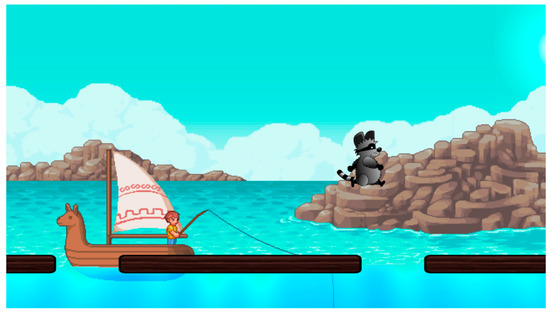
Reading the Research: Diagnosis by Video Game
Welcome back to Reading the Research, where I trawl the Internet to find noteworthy research on autism and related subjects, then discuss it in brief with bits from my own life, research, and observations.
Today's article is perhaps a look into what future diagnostic options might include.
When I was given my autism diagnosis, it was after literal hours of testing. I did something like nine tests, many of which were apparently just to map out my capabilities. It was, suffice it to say, exhausting. Funnily enough, they did an attention span and reflex test right at the end, which... we'll just say I didn't score well and leave it at that.
The point is, the testing was an ordeal. It was 4+ hours, left me exhausted, and by the end, probably wasn't giving me fair results. Also, it was expensive, but I was privileged enough to be on my parents' (very good) insurance at the time, so the cost didn't matter so much.
Y'know what's way cheaper than hours of a PhD holder's time? Video games. Presumably designed by PhDs.
This particular iteration is just an extremely simple platformer, which I suppose at least reduces your chances of interference from a visual processing disability (such as mine) interfering. You pilot a raccoon as it jumps over holes in the terrain. The size of the holes varies, as does the terrain and the speed of the raccoon.
I suppose this particular diagnosis (ADHD, which is often co-diagnosed with autism and shares many of the same traits) might be low-hanging fruit. ADHD is primarily a difference in attention behaviors, which could theoretically be measured with a timer and anything you need to pay attention to.
Still, I lowkey love the idea. While I don't see it 100% replacing a battery of diagnosis tests, it could replace the screening phase, which is sometimes the first visit to a professional... or an online test of dubious credibility. And it could do it remotely, in less than 10 minutes, on nearly any computer or smart phone.
Something of note here is that the sample size for their experiment was quite low. Likely, it was what's called a "sample of convenience," meaning it was whoever happened to be around and already connected with the organization. 32 children, all but three of which were male, and all of which were on medication, doesn't seem terribly representative. There was also no control group.
I mention the lack of control group for a very specific reason. I actually really wonder how a neurotypical control group would fare on this test. You see, with the advent of the Internet, attention spans in the general population have decreased rather significantly. So I really wonder how people in general would have scored...
Regardless, it's a cool idea, if a very simple one.
(Pst! If you like seeing the latest autism-relevant research, visit my Twitter, which has links and brief comments on studies that were interesting, but didn't get a whole Reading the Research article about them.)
Monday, December 21, 2020
Reading the Research: Building Confidence
Welcome back to Reading the Research, where I trawl the Internet to find noteworthy research on autism and related subjects, then discuss it in brief with bits from my own life, research, and observations.
Today's article showcases an important step in living a happier life. For everyone, really. Everyone benefits from learning independence skills and having more control over their lives. It's particularly relevant for autistic people, though, because we don't have the same opportunity to learn these skills.
This article focuses on medical self-care skills. Things like filling a prescription, scheduling a doctor's appointment, managing co-pays, and understanding insurance plans are stuff I had to more or less learn on the fly. Even now, I'm not honestly sure I have the latter one all figured out.
Which is why the assessment proposed in the article would be so helpful. Typically, you don't really know you lack these skills until the time comes to use them, by which point it's very "sink or swim." For people who don't typically thrive on improvisation, such as myself, this added challenge on top of all the other life challenges is not a kindness. It's exhausting.
I'm pretty sure if I took the assessment, I'd probably score low in the "how to deal with law enforcement" section. Maybe average to above average in the rest, since I've been on my own for a while. All the same, I kind of wish I could take the assessment and whatever training might come with it. Being an adult is shockingly complicated, especially when you factor in complicated medical needs and support services.
The thing is, a lot of autistic people tend to lack confidence in our skills. Myself included. The world, and sometimes even our friends and family, spends a lot of time telling us that we're disabled and can't do things for ourselves. Sometimes this is true. Sometimes this is only temporarily true, and with practice and education we can manage things for ourselves.
But we do have to be given the chance to try, and that's where a lot of the autism parents I've run into struggle. Making the transition from being Protector from All Harm to Square One is something done in stages, and requires trust, patience, and the willingness to let the person fail.
Teaching self-management skills, such as these medical self-care skills, is one piece of that. No matter how good a job you do protecting a person from the world, there will always come a time when you can't be there. Doesn't it make sense to prepare them for it, rather than hiding from it as long as possible?
(Pst! If you like seeing the latest autism-relevant research, visit my Twitter, which has links and brief comments on studies that were interesting, but didn't get a whole Reading the Research article about them.)
Monday, December 14, 2020
Reading the Research: A Very Imperfect Process
Welcome back to Reading the Research, where I trawl the Internet to find noteworthy research on autism and related subjects, then discuss it in brief with bits from my own life, research, and observations.
Today's article has some interesting things to say about the diagnostic process, as well as autism diagnoses specifically. This links to the full-text article, not a summary, so be warned.
The intro to this study discusses includes the absurdity of psychiatric diagnoses, especially autism. In the typical medical field, you collect the symptoms until you get a match. Maybe you have to do a blood test, but there's typically a single, objective right answer.
Unfortunately, we simply don't have that kind of broad knowledge about the brain and the mind. Both are an order of magnitude more complex than most diseases. So when you get to mental illnesses, or into developmental disorders like autism (not a disease, thank you), the diagnosis process becomes messy. Instead of simple blood tests that produce a yes/no result, you get interviews full of subjective questions and subjective answers.
The point of this study was to look into how clinicians handle this uncertainty. Autism diagnosis is far more art than it is science, due to the truly absurd number of differences between individuals. The diagnosis is barely useful in a medical setting, in my opinion, due to that fact... and a significant number of frustrated parents agree.
Despite all that, there is pretty clearly something different about autistic people. We simply don't have the terminology and coherence of data to describe it in medically useful ways. (We do have commonality of experience, at least. Which has led to a thriving community where autistic people help each other out, which is beautiful.)
The results were interesting. Clinicians in this data set seem to simultaneously adhere to the medical concept (you are either autistic or not) and yet recognize and operate within the social concept as well (autism can be concealed or exaggerated via masking, gender norms, other medical or mental health conditions, acting, and poor reporting).
There was also the recognition that a diagnosis opens doors to resources and supports. This is particularly true in the US, where Medicaid may be your only hope of affording the appropriate services, like job training, in-home help, and transportation access. It can be significantly safer to have the diagnosis in case you need it, rather than avoid it and be denied access.
In the end, it kind of seems like the studied cases were more "diagnosis by consensus" than a doctor consulting the results of various tests and declaring the appropriate condition. That's kind of a strange state of affairs, given the rest of medical history.
It'll be interesting to see how diagnostic criteria evolve in the future, as we learn more about the brain and neurodiversity overall. Perhaps this "diagnosis by consensus" is merely a phase. Or perhaps it'll always be that way when it comes to brain-related conditions. Time will tell.
(Pst! If you like seeing the latest autism-relevant research, visit my Twitter, which has links and brief comments on studies that were interesting, but didn't get a whole Reading the Research article about them.)
